

Welcome to my Hunterdon County Market Report—a monthly publication where I draw on my local expertise to unpack the latest developments in our real estate market. Rather than focusing on state or national trends, this report zeroes in on Hunterdon County and its surrounding areas. Each edition explores the economic forces and market dynamics influencing local property values. More than just numbers, it delivers hyper-local insights you won’t find elsewhere. By the end, you’ll understand both the what and the why behind recent market shifts—empowering you to make confident, informed real estate decisions throughout 2026.
As a Certified Senior Real Estate Specialist (SRES), I also work with senior clients and their families to guide them through the many challenges of this life stage, drawing on my deep network of reliable senior service resources.
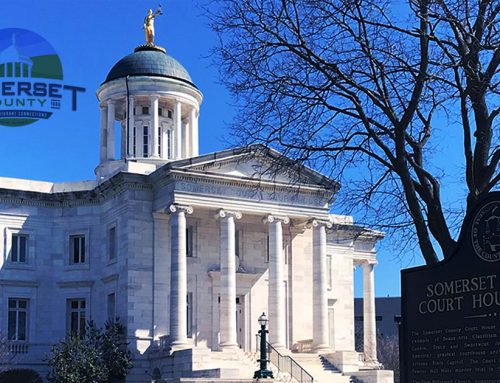
You can also find a version of the report covering Somerset County here.
“What’s Happening in Hunterdon County’s Real Estate Market?
69 Under Contract Listings $616K Average List Price 58 Average Days on Market
“Learn what is in store for home prices in our area in 2026?”
Inventory is up about 15% in Hunterdon County since this time last year. Our state has an overall supply of 2.9 months, while Somerset County has 1.8 months and Hunterdon has 2.5 months. We are holding our own. The recent NYC elections could help, but it is too early to tell.
The Fed cut interest rates by 0.25% in September, October, and December. Yet interest rates have held at around 6.1%. We are not going to see this rate decline until the 10-year bond dips below 4%, as they are being propped up by lingering inflation and unemployment worries.
The last employment report, for December, showed the creation of 50K new jobs and the unemployment rate dropping to 4.4%. And there are many rumors of workforce reductions due to AI automation (which could persist and stretch out over the coming months as employees receive severance packages). Also, the inflation rate is holding at around 2.5%. As I said, there are many conflicting factors.
In a broader context, the real estate market shows signs of returning to a more typical state or normalizing. This usually starts at higher price points, then moves down, and proceeds from east to west. More inventory results in more competition. This leads to longer time on the market, fewer offers exceeding the asking price, and bids with contingencies such as mortgage approval, home sale, and inspection. The inventory of newly listed properties has remained steady compared to previous months, contributing to overall stability in total inventory. However, strong demand continues to outpace supply (especially in our lower price points), leading to rising prices in our region. Already in higher price brackets, price pressure exists as those market segments move toward a balanced or even buyer-oriented market.
For those considering buying or selling, the answer lies within this analysis. The market still favors sellers due to the fast-moving inventory, which helps maintain price stability in our locality. However, there is a gradual shift toward a buyer’s market at higher price points. Over the past years, NJ prices have increased significantly—nearly 12% in 2020, 18% in 2021, 9% in 2022, 11% in 2023, 7% in 2024, and 5% in 2025. While a more modest 4% growth was anticipated for 2026, homes priced at $800K and above are seeing increased inventory, which is impacting their supply-and-demand dynamics.
Conversely, prices below this threshold continue to rise, although the rate of increase has decelerated. Increases will likely be more moderate in future years but still show positive growth. The fifty-year average price increase remains below 5 percent.
🏡📈
Market Statistics for Hunterdon County:
- Last month, the market saw a slight decrease in new inventory, with 69 new listings, up nicely from 35 the previous month. This was higher than 59 new listings in the same month in 2024.
- As of the beginning of this month, the available inventory has increased to 178 units, down from 169 units last month. This is higher than the 147 units available in the same month of the previous year. Much of this new inventory is at our higher price points.
- The number of units that went “under contract” last month was 69, down from 70 the previous month and from 81 in the same month last year.
- Over the past month, the average number of days on the market has risen to 58. showing a seasonal slowdown.
- Currently, the month’s supply of inventory is just under 2.6, indicating we are still in a strong seller’s market. This trend holds for properties priced under $700K
- The current month’s supply still indicates a strong seller’s market, with prices rising.
Given current market conditions, where supply and demand favor sellers, postponing your sale until later in 2026 may not be the best option. The market is likely nearing (or at) its peak, and it’s unlikely that prices will remain elevated for much longer. Therefore, it would be wise to capitalize on the current situation and list your property for sale now.
In summary, acting promptly in the current market could benefit sellers.
New Jersey Residential Real Estate Market Forecast
The fall of 2025 saw solid activity in both listings and sales.
Although inventory levels have increased, new listings continue to sell quickly, resulting in strong sales and favorable pricing for sellers. However, the biggest challenge in 2026 remains finding a more suitable home and securing an affordable mortgage.
For buyers, recent declines in interest rates (and speculation that they could drop further) have brought renewed optimism compared to a few months ago. This has also affected trade-up buyers similarly.
However, interest rates have still priced many first-time buyers out of the market and made most trade-up buyers hesitant to move. Recent fluctuations in rates offer limited hope in this area. Nevertheless, now is still a good time to buy a home, as stabilized market conditions and reduced competition create favorable terms. Additionally, refinancing remains an option if rates continue to fall.
Hunterdon County Real Estate Market Inventory Breakdown By Price For Last Month:
| January | January | Total | ||
| Hunterdon County | New | Under | Active | Months’ |
| Listings | Contract | Listings | Supply | |
| Condos/Town Houses * | 18 | 22 | 30 | 1 |
| Over 55 Communities * | 3 | 4 | 3 | 1 |
| $000K to $199K | 0 | 0 | 1 | |
| $200K to $299K | 8 | 2 | 16 | 8 |
| $300K to $399K | 4 | 14 | 10 | 1 |
| $400K to $499K | 14 | 16 | 28 | 2 |
| $500K to $599K | 8 | 10 | 18 | 2 |
| $600K to $699K | 9 | 7 | 17 | 2 |
| $700K to $799K | 6 | 6 | 17 | 3 |
| $800K to $899K | 5 | 5 | 16 | 3 |
| $900K to $999K | 8 | 2 | 17 | 9 |
| $1,000K and Up | 7 | 7 | 38 | 5 |
| Totals for January | 69 | 69 | 178 | 3 |
| Average Price | $743,978 | $615,471 | -17.3% | |
| Average DOM | 58 | |||
| * Included in $ breakdowns |
- 41% of sales in houses > $500,000
- 46% of sales in the $500,000 to the $1,00,000 range
- 13% of total sales (or 26 in total) in houses >$800,000
Hunterdon County Real Estate Market Inventory Breakdown By Municipality For Last Month
| Hunterdon County | Active Listings | Under Contract Last Month | Months’ Supply |
| Alexandria Twp. | 9 | 1 | 9 |
| Bethlehem Twp. | 7 | 3 | 2 |
| Bloomsbury Boro. | 4 | 0 | |
| Califon Boro. | 2 | 0 | |
| Clinton Town | 1 | 0 | |
| Clinton Twp. | 12 | 6 | 2 |
| Delaware Twp. | 11 | 3 | 4 |
| East Amwell Twp. | 1 | 3 | 0 |
| Flemington Boro. | 4 | 0 | |
| Franklin Twp. | 5 | 0 | |
| Frenchtown Boro. | 1 | 0 | |
| Glen Gardner Boro. | 7 | 2 | 4 |
| Hampton Boro | 4 | 3 | 1 |
| High Bridge Boro. | 4 | 4 | 1 |
| Holland twp. | 4 | 3 | 1 |
| Kingwood Twp. | 8 | 2 | 4 |
| Lambertville City | 5 | 2 | 3 |
| Lebanon Boro. | 3 | 1 | 3 |
| Lebanon Twp. | 13 | 1 | 13 |
| Milford Boro. | 7 | 1 | 7 |
| RaritanTwp. | 24 | 20 | 1 |
| Readington Twp. | 20 | 8 | 3 |
| Stockton Boro. | 2 | 1 | 2 |
| Tewksbury Twp. | 11 | 1 | 11 |
| Union Twp. | 6 | 3 | 2 |
| West Amwell Twp. | 3 | 1 | 3 |
| Totals | 178 | 69 | 3 |
Six areas had no sales last month:
- Bloomsbury
- Califon
- Clinton Town
- Flemington
- Frenchtown
- Franklin Twp.
Ten areas had 1 or 2 sales each last month:
- Bethlehem Twp.
- Glen Gardner
- Kingwood
- Lamberville
- Lebanon Boro.
- Lebanon Twp.
- Milford
- Stockton
- Tewksbury
- W Amwell
Hotspots:
- Clinton/Clinton Twp. – 9 Sales
- Raritan – 20 Sales
- Readington – 8 Sales
Approximately 54% of sales were concentrated in the hotspot areas in the past month. Here’s a breakdown of the average prices:
- New Listings Entering the Market: The average list price was $743,798.
- Units Going Under Contract: The average list price for units that went under contract was $615,471.
- This represents an 17.4% difference between the average prices of new listings and units under contract.”
In summary, understanding these price dynamics can provide valuable insights for buyers and sellers in the real estate market.
Note:
If you want to obtain a competitive price for your property based on its location and uniqueness, you can contact me at (908) 304-4660. By leveraging Coldwell Banker’s big data technology and Artificial Intelligence capabilities, you can gain a unique advantage in the market. I can demonstrate your area’s latest age and earnings breakdown, including where people are moving from and how to market directly to those specific areas and demographics. This approach will maximize the selling price while reducing the time on the market. Accurately priced and marketed homes tend to sell faster with the assistance of a seasoned real estate industry veteran and a local area expert.
“Why” is it happening…
New Jersey’s Economic Drivers:
New Jersey Home Sales and Inventory Levels:
Contrary to what you see on the news, the local Hunterdon and Somerset county markets remain strong. While the network news is accurate for some areas of the country (mainly those with heavy new-development sales), my report focuses only on our two counties in NJ, which consist primarily of resales. Our only new construction is mainly from the high end of the market.
- Sales across NJ declined 13% in January, while inventory increased slightly from last year and rose 20%.
- Locally, we saw a seasonal decrease in sales in January in both Hunterdon and Somerset counties (mostly weather-related).
- There are early signs of a pullback in pricing at the higher tiers, but the lower tiers are still seeing price increases, albeit less aggressively than in the past.
- First-time buyers are cooling off considerably due to higher prices (price resistance), inventory shortages, and rising interest rates. Their purchasing power has decreased for these reasons, and many have been priced out of the market for now. Our average age of first-time buyers is now 40.
- Potential sellers find it challenging to locate suitable housing in the current market and are hesitant to list until they do. They are also dismayed by higher interest rates on their homes and, for the most part, are unwilling to move unless there is an urgent reason, such as a life event or a job transfer.
- About 40% of all homes are owned outright. Of those with mortgages, nearly 50% of all homes have a mortgage of 4% or less, and 50% have a mortgage of 4% or more.
- The current month’s inventory supply in Hunterdon County remains just under 2.6 months. In Somerset County, it is approximately 1.8 months due to rapid sales of new listings (velocity) and an active market.
- Hunterdon and Somerset counties have a considerably higher inventory than they did a year ago. The unsold inventory in New Jersey has steadily declined since peaking at over 20,000, and it has now risen again to approximately 13,600.
- Inventory increased across all price points as of the end of January, with the under $400K price tier rising 19% and the $600K to $1,000 price tier growing by a lesser 9%.
- The new housing development has not kept pace with population growth and is now focused on the rental market.
- In summary, lower inflation will lead to lower rates and increased sales.
Interest Rates:
- Interest rates are now hovering around 6.1%.
- The Fed cut rates by 0.25% in September and again in October and December, which was already reflected in current rates, as widely expected.
- A further cut is anticipated in 2026.
- Rates will go down as inflation subsides. They are based on the 10-year bond yield, which will rise as inflation and unemployment rise.
- Many buyers are considering attractive ARM rates and creative other buy-down plans as alternatives.
- Based on current rates, first-time buyer mortgage applications have declined, but debt restructuring and paying down high-interest debt remain active.
- The Fed’s efforts to slow things down have resulted in the above.
National Job Front:
- The shutdown has affected our ability to obtain up-to-date numbers.
- Total nonfarm payroll employment increased by 108,000 in September, decreased by 105,000 in October, and then rose by only 64,000 in November. In December, employment increased by 50,000 jobs, and unemployment dropped to 4.4 percent, the U.S. Bureau of Labor Statistics reported. Employment continued growing in food, health care, social assistance, and construction. Average hourly earnings rose 0.3% for the month, in line with the forecast, although the annual increase of 3.8% was 0.2 percentage points higher than expected.
- Key adjustments included October revised from -105,000 to -173,000, and November revised from +64,000 to +56,000, signaling a slowdown that caps a weak year for job growth.
- Jub groth nationally in 2025 was under 600K vs. 2 million in 2024.
- It’s important to note that this number includes about 175K in natural job growth per month.
- The labor force participation rate held at 62.4 percent. This rate is calculated by dividing the total number of workers employed or actively seeking employment by the working-age population. It also fluctuates because people take a second job to make ends meet.
- Many people were resigning to pursue new career paths due to perceived health risks, the desire for more remote work, and a better work-life balance. New technology-based jobs are affecting this trend.
- For those under $50K, there is even some incentive not to work and collect benefits, contributing to the current unemployment rate.
- The lower end of the job market (which typically does not own houses) has benefited the most from this trend, with higher starting pay rates competing for a labor shortage. Positions starting at mid- to upper $20 per hour are already being offered.
New Jersey Job Front:
- Initial reports show NJ adding under 1oK jobs vs nearly 40K in 2024.
- Job losses remain prevalent across industries such as construction, food services, and accommodations. Retail and wholesale trade are also experiencing a downturn in some states. Even health care, social assistance, and manufacturing are shedding workers.
- Note that the number of jobs in New Jersey lags the national figure by a month.
Rental Market Trends:
- Rental prices in New Jersey continued to increase in 2025 but are beginning to decline, with a year-over-year average of just under 3%. They are currently averaging just over $2,400 per unit. However, recent data shows a slight decrease in these prices.
- The vacancy rate in central New Jersey is currently 6%, indicating a limited rental supply and driving up rents. It should be noted that the return of over 2 million illegal immigrants has greatly affected these figures.
- The rental market typically includes low-end buyers who rent due to a shortage of available housing. However, recent constraints in the mortgage market have also contributed to growth in this sector.
New Jersey Foreclosures:
- NJ’s delinquency rate (more than 90 days past due) increased in the 4th quarter compared with the same period in 2024.
- NJ’s current foreclosure rate has risen considerably to over 1.5%.
- Nationally, $11 trillion in equity is needed to protect homeowners during a potential recession.
- The average FICO score of mortgage holders is over 750, higher than during the 2008 financial crisis.
- A slowdown and recession could still cause job losses and put mortgages at risk.
- A housing bust is not expected, as home equity is significant thanks to recent appreciation.
Real Estate Market Recap
Forecast:
- The consumer price index, which rose 2.68% Y-O-Y in November (the last month reported), continues to drive up auto, finished-goods, and energy prices and is the enemy of long-term interest rates.
- Mortgage rates had pulled back a bit, and are now back to the 6.1% range.
- The local inventory accumulates primarily in the more expensive price ranges, and the housing affordability index has increased slightly (based on wages, rates, and home prices). As a result, mortgage payments now have an all-time high share of gross income (which slows spending in other sectors).
- Due to COVID-19 and recent unrest in NYC, interest in living in more suburban counties such as Hunterdon and Somerset has disappeared. In fact, many companies are now requiring more on-site presence, reversing the move westward. This may reverse again with the results of the recent election.
- Retailing and the use of vacant industrial space will transform to meet new, altered demands and lifestyles.
- The local market will need to adapt to the new suburban renaissance, considering where people will work and what they need.
- The lingering question has been, “Can we keep this momentum up with low to moderately rising inventory?” as predictions for slower sales and price increases in 2026 have already been made. In 2025, we saw more normalized increases (based on your price points) of 5% or more (which is what we also said last year).
- Days on the market in our area have risen (seasonally). Still, they are growing, indicating that buyers are less active seasonally and have more inventory to choose from.
- However, change will result in a trend toward a more normalized environment if inventory continues to come onto the market and the first-time buyer fatigue we have seen persists.
- Younger buyers (millennials) are coming of age over the next 4 to 5 years, which will continue to put more demand on the first-time buyer market, typically under $400K.
- Housing markets are adding much of the new inventory at higher price points, which is normalizing those results. Change usually happens from the top down and from east to west.
- In a nutshell, 2025 looked a lot like 2024, with more inventory and slightly better rates.
- More inventory means more options for buyers and a longer time on the market for sellers. Also, this is leading to fewer competitive offers.
- The Fed recently indicated it is close to ending its balance sheet runoff (quantitative tightening) and will become a net buyer of short-term Treasury bills starting in 2026 to offset maturing mortgage-backed securities. This move is aimed at addressing stress in overnight funding markets and can be seen as a form of easing, which could indirectly affect longer-term yields. There is also a move underway for Freddie Mac and Fannie Mae to buy up mortgage-backed securities. This, in turn, will hopefully lower interest rates.
This is substantial information, and the situation is evolving daily. Nevertheless, it appears to be moving in a positive direction for now. If you require further clarification or have any concerns about how this could impact your circumstances, please don’t hesitate to contact me at (908) 304-4660. I’m always available to chat and help you gain a better understanding.
Also, as a Certified Senior Real Estate Specialist (SRES), I work with senior clients and their families to guide them through the many challenges of this life stage, drawing on my deep network of reliable senior service resources.
Note: This information is presented as a public service by Joe Peters of Coldwell Banker Residential Brokerage. Although reasonable care has been taken to provide this information, it is advised that you seek guidance from a professional sales agent and avoid making any decisions solely based on my views, trends, and statistics. I am not responsible for any consequences arising from the use of this data.
If you have any questions or would like to talk out your situation, please call 908-304-4660
You can ask me a question or request a monthly newsletter copy here.